
Every water heater job we do, and what's in it
Tank and tankless, gas and electric, residential and commercial. That is the whole list, and it is why the right part is usually on the truck.
Eight jobs. Pick yours.
Tank water heater replacement
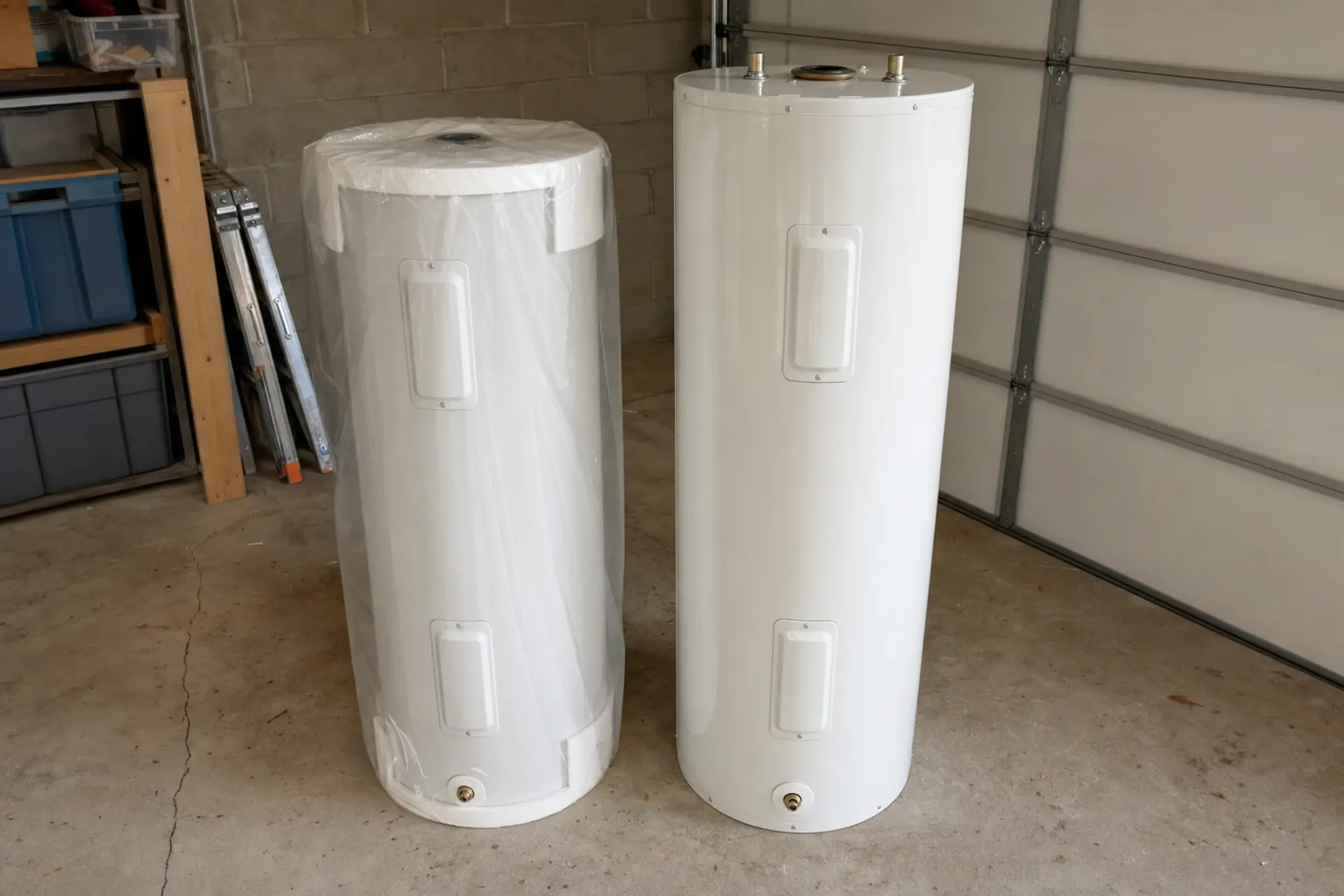
Most tanks in Orange County give out somewhere between eight and twelve years. Hard water shortens that. When the tank body itself is leaking, the glass lining has failed and there is nothing to repair. The water is coming through steel.
We carry 30, 40, 50 and 75-gallon gas and electric units and we size to the house, not to whatever is sitting in the truck. A family of four in a two-bath house is usually a 50-gallon gas; a condo with one bath is often better off with a 40 that recovers faster than the old one did.
What the day looks like
Drain and pull the old unit. Set the new one, usually on a fresh drain pan. Re-plumb with new flex connectors and a new shut-off. Two seismic straps, upper third and lower third. Expansion tank if the house is on a closed system. New T&P discharge line to outside. Gas flex and sediment trap on gas units, or the disconnect checked on electric. Light it, check the draft, insulate the lines to Title 24, and haul the old tank away.
Time on site
Most straight swaps are three to four hours. Add time if the closet has to be re-worked or the venting has to change.
Tank water heater repair
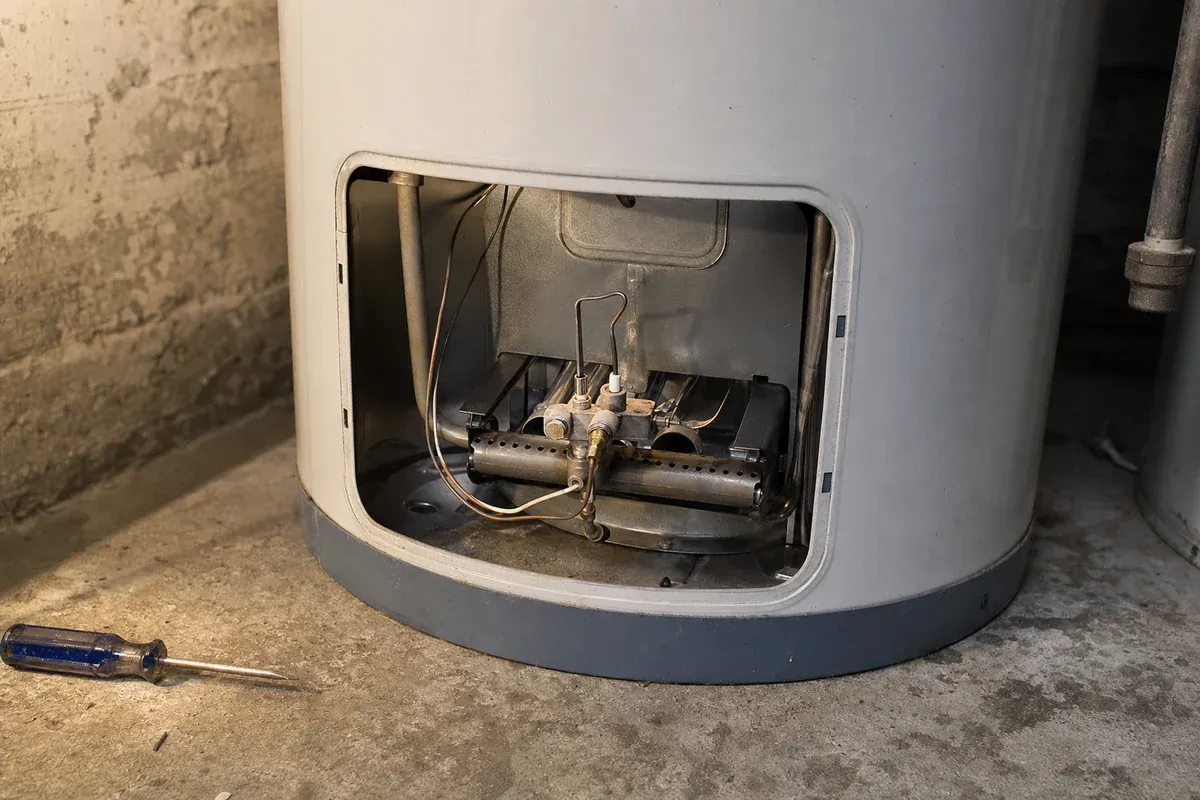
Not every dead water heater is a dead water heater. On a gas unit the usual suspects are the thermocouple, the pilot assembly, the gas control valve or a blocked flue. On an electric unit it is almost always a heating element, a thermostat, or the high-limit switch that has tripped and needs resetting and then diagnosing, because a high limit does not trip for no reason.
Other things we replace without touching the tank: the T&P relief valve when it weeps, the dip tube when you are getting lukewarm water out of a healthy tank, and the anode rod when the tank is worth saving.
Where we will tell you to stop
If the tank is over ten years old and the repair is a gas control valve or a leaking tank body, we will say so. Putting a $400 part into a twelve-year-old tank is not a favour.
Time on site
Most repairs are one to two hours once we have the part, and we usually have it.
Tankless water heater installation
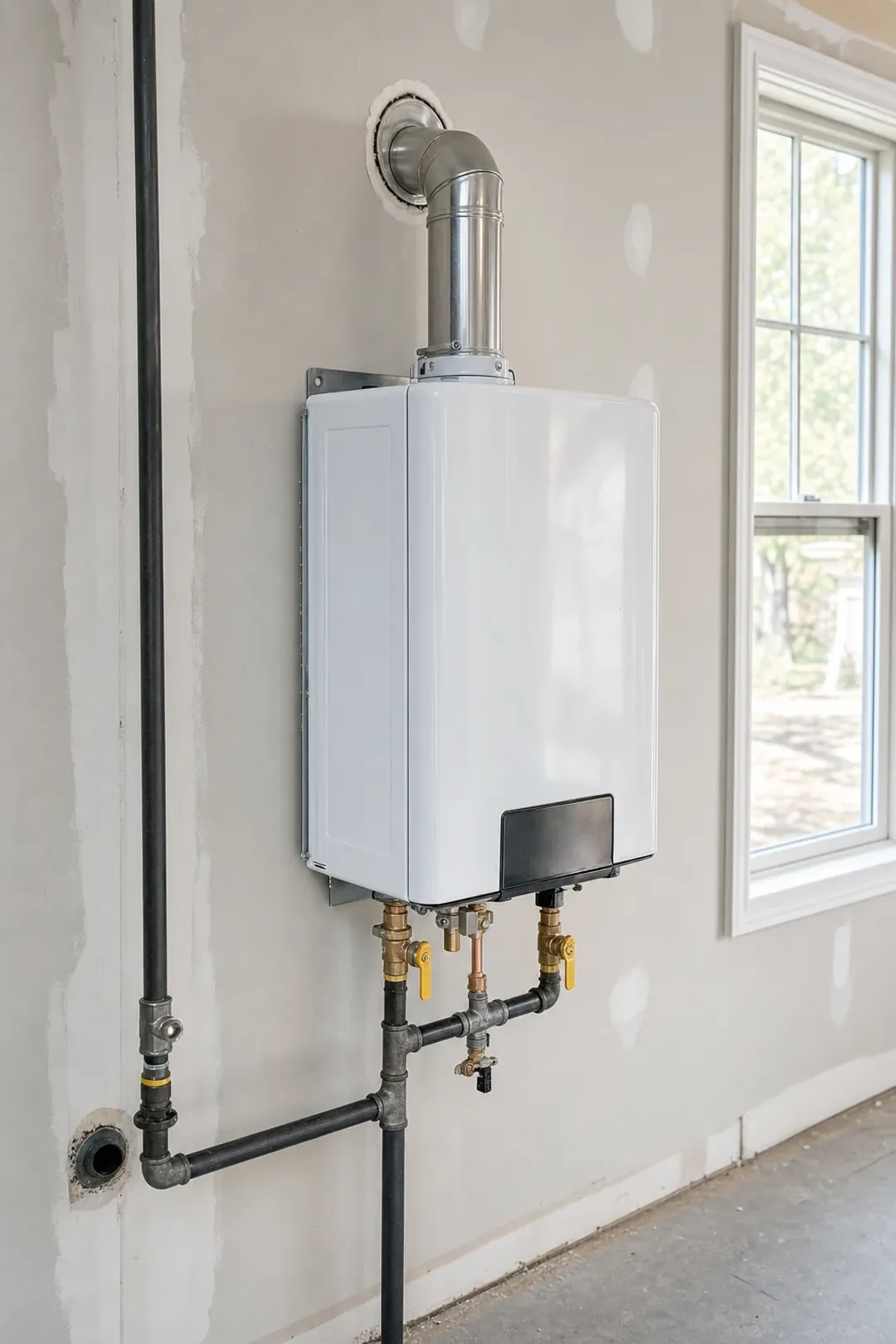
A tankless conversion is a bigger job than swapping a tank, and anyone who tells you otherwise is about to do it wrong. A tankless unit fires at a far higher input than a tank, so the gas line usually has to be upsized. A half-inch run that fed a 40-gallon tank will starve a tankless unit and you will get error codes instead of showers. Venting changes too: condensing units need their own sealed stainless or PVC vent and a condensate drain with neutralisation, not the old B-vent up the chimney.
We do the gas load calculation before we quote, not after. If the meter or the line makes the conversion uneconomic, we tell you on the first visit.
What we always fit
Isolation and service valves on the inlet and outlet. They add a small amount to the install and they turn every future descale into a twenty-minute job instead of a two-hour one. Plus a sediment filter on the cold inlet, because Orange County water is hard and the heat exchanger is the expensive part.
Time on site
A straightforward conversion is a full day. Gas-line re-runs or a relocation can make it two.
Tankless repair and descaling
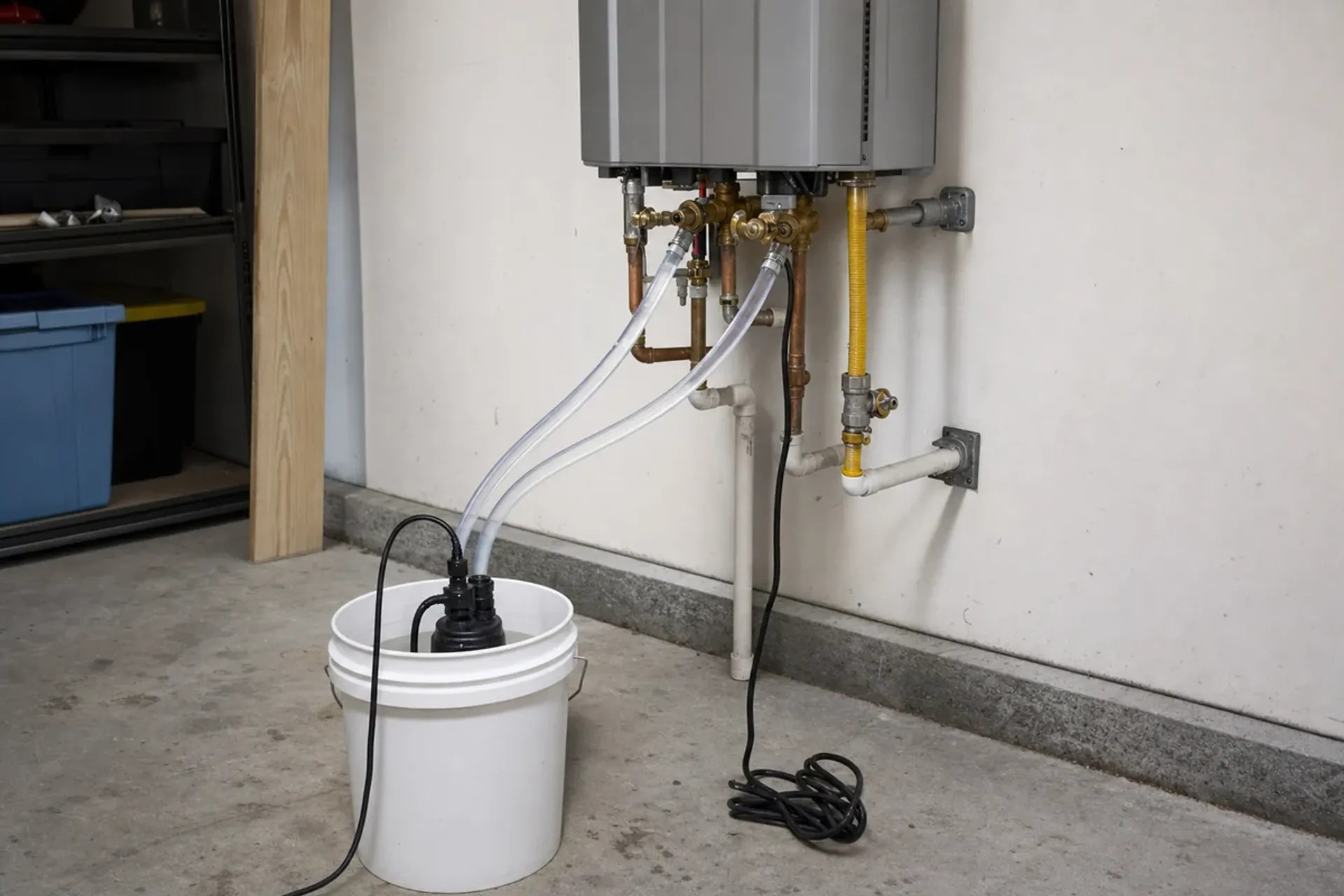
Tankless units throw error codes, which is a gift. The unit usually tells us what is wrong before we open it. Common ones are ignition failure, flame loss, a fan or flow-sensor fault, and the family of codes that all mean the same thing: scale.
Scale is the one that matters here. Hard water leaves calcium on the inside of the heat exchanger, the unit has to work harder to hit the set temperature, and eventually it either short-cycles or faults out. A descale circulates solution through the exchanger for about forty-five minutes and brings the flow rate back.
How often
Roughly once a year on Orange County water. Every two years if you have a softener. If the unit has service valves it is quick; if it does not, we fit them while we are there.
Also on tankless
Igniters, flame rods, flow sensors, fan motors, gas valves, and cleaning the inlet filter and burner assembly.
Time on site
A descale is about an hour. A diagnosis-plus-part repair is usually the same visit.
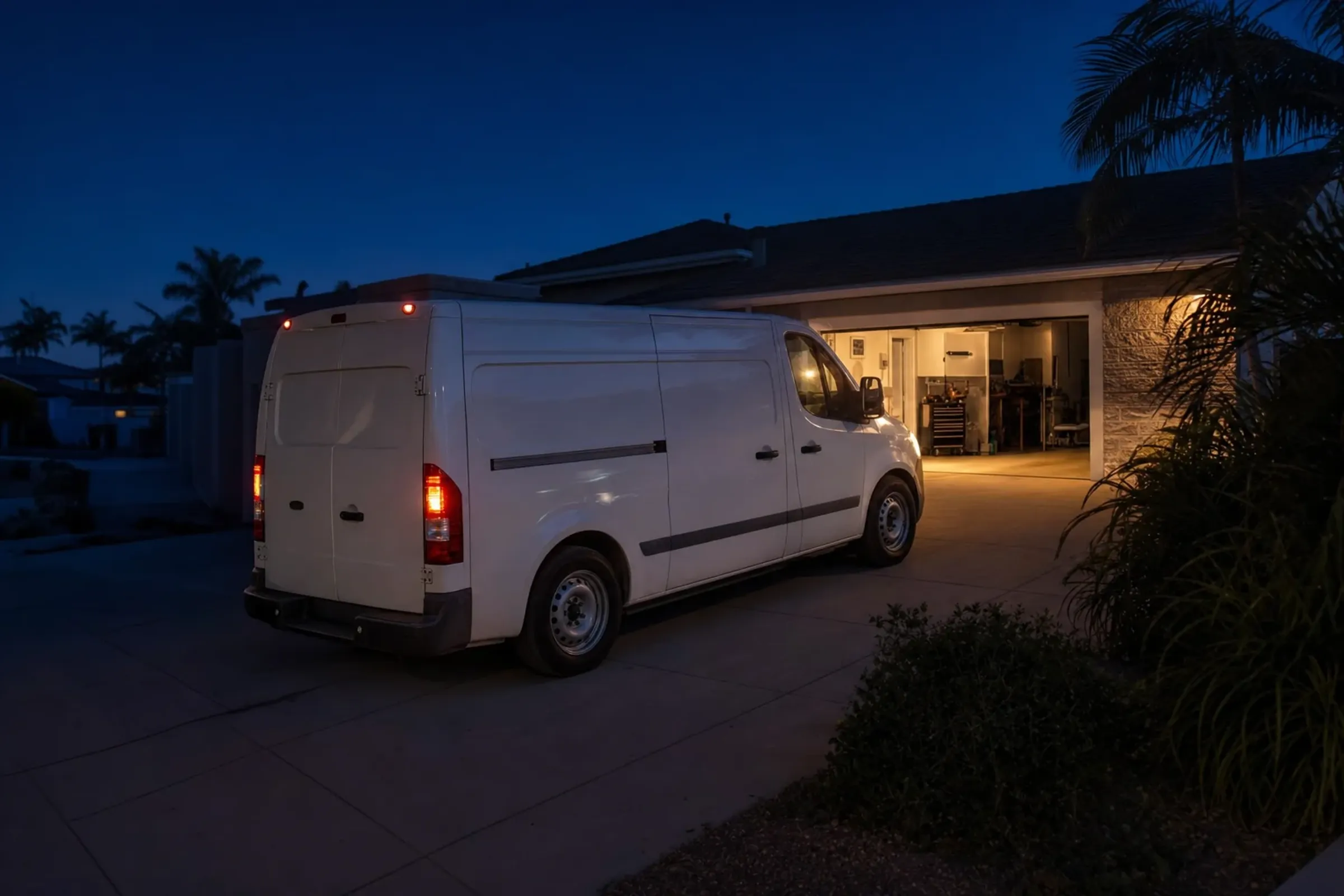
24 Hour Emergency Service
We are available 24 hours a day, 7 days a week.
A real person answers, day or night. Tell us what the heater is doing and we will tell you what happens next before anyone gets in a van.
Open 24 hours, seven days a week
Electric water heaters
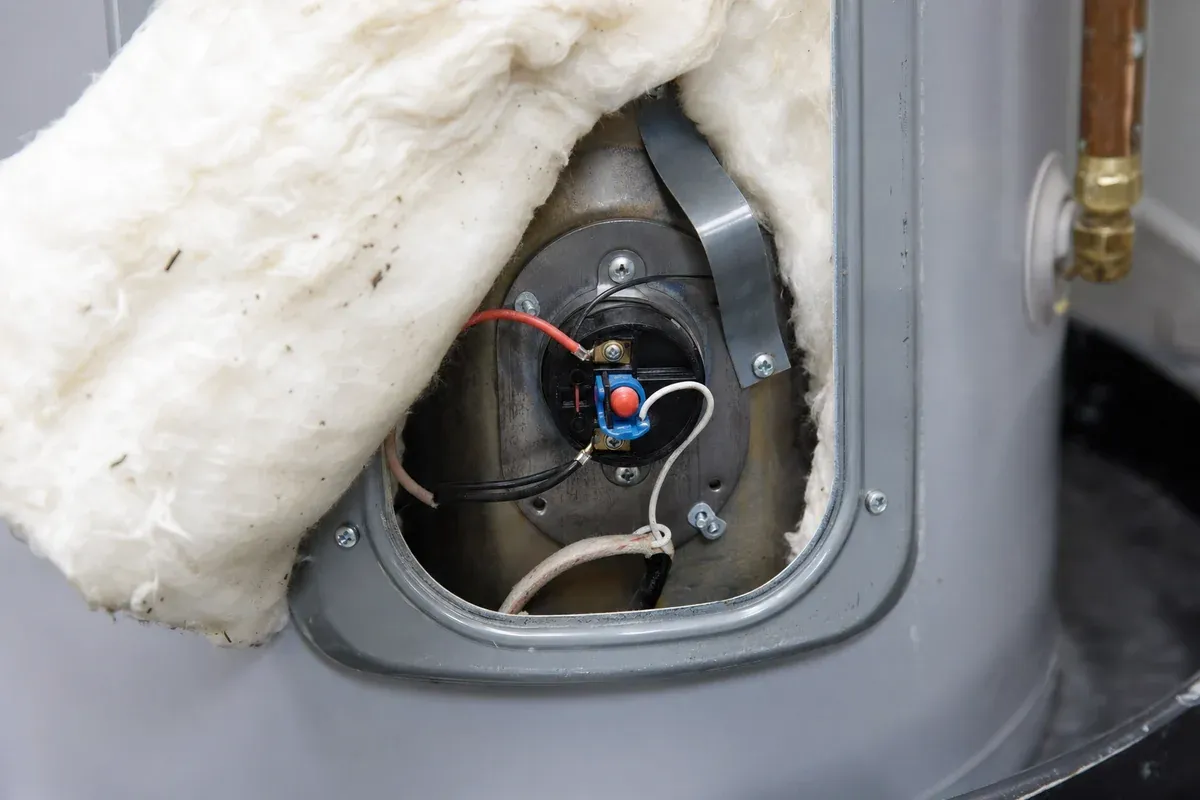
Electric units are simpler and they fail differently. No pilot, no flue, no combustion air, just two elements, two thermostats and a high-limit reset behind the upper access panel. If you are getting a little hot water that runs out fast, it is usually the lower element. If you are getting none at all, it is the upper element or the reset.
We replace elements and thermostats, and we do straight electric-to-electric swaps in 30, 40, 50 and 80-gallon sizes. Same code work applies: two straps, expansion tank on a closed system, drain pan, T&P line to outside.
One caution
If you are thinking about going from gas to electric, or from electric to a heat-pump unit, the circuit and the panel have to be checked first. A heat-pump water heater also needs air volume around it and somewhere for the condensate to go, so a tight interior closet is often the wrong place for one.
Time on site
Element or thermostat, about an hour. Full swap, two to three hours.
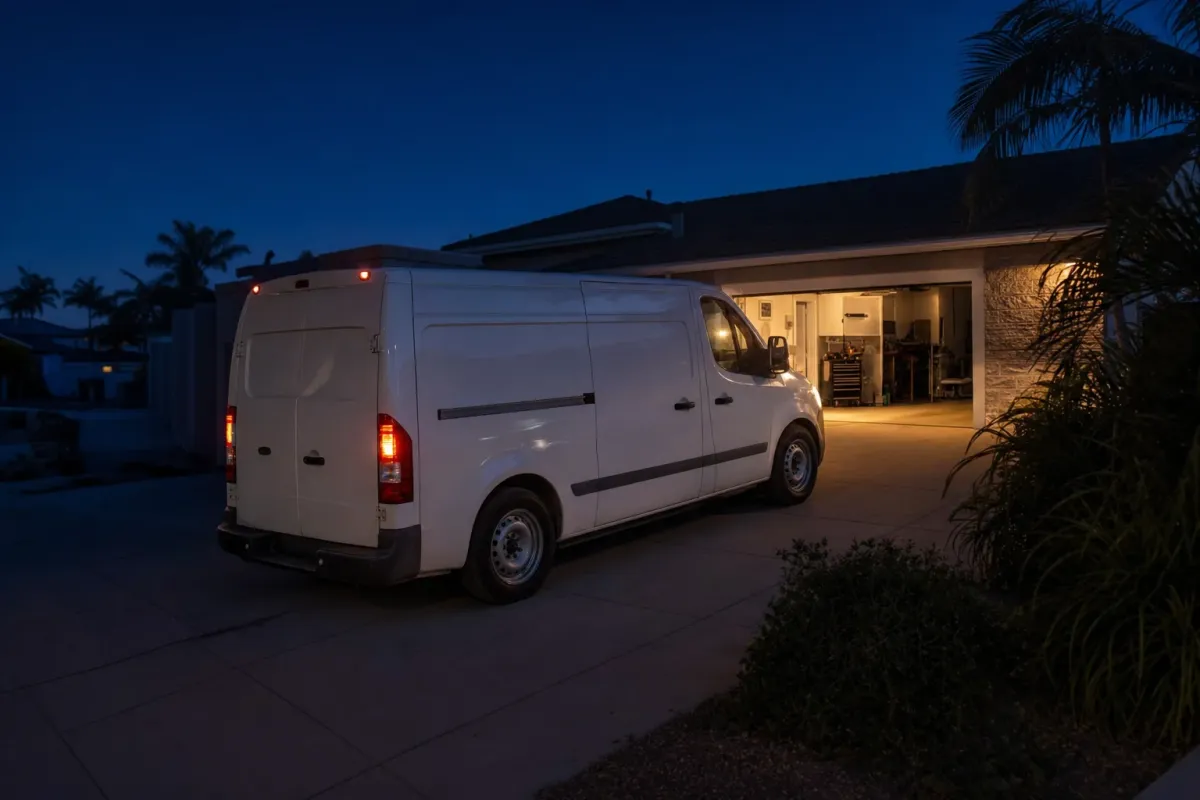
Emergency and same-day service
The Google profile says open 24 hours and it means it. Water heaters do not fail at 10 a.m. on a Tuesday. They fail on a Sunday night, and they fail the morning you have people staying.
If there is water on the floor, do this before you call: close the cold-water inlet valve on top of the heater, and on a gas unit turn the control knob to OFF. That stops it getting worse while we are on the way.
Then call. Do not use the form for an active leak.
What “same day” honestly means
If you call in the morning and it is a standard tank in a standard closet, same day is normal. If it is a tankless conversion, a relocation, or a size we do not stock, we will book it properly rather than promise you something we cannot land.
Maintenance: flush and anode rod
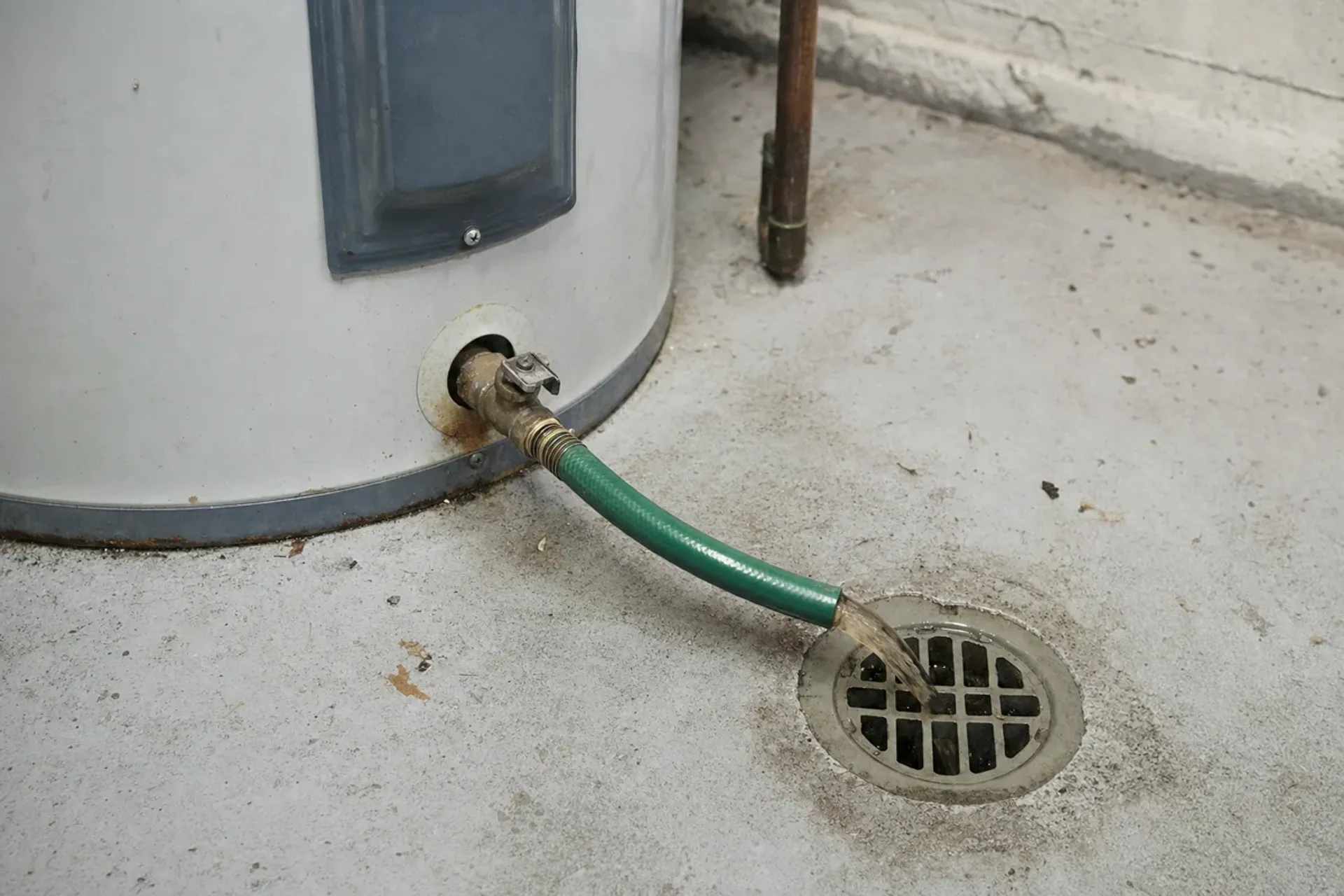
Two jobs, both cheap, both the reason some tanks last fifteen years and some die at eight.
The flush
Sediment settles on the bottom of a tank and the burner has to heat through it. That is the popping and rumbling you hear. Draining and flushing once a year clears it and gets the recovery time back. On a tank that has never been flushed and is already past ten years, we will sometimes advise against it: disturbing that much sediment can unseat a drain valve that was the only thing holding.
The anode rod
A sacrificial magnesium or aluminium rod that corrodes so the tank does not. It is the single most useful thing anyone ever does to a water heater and almost nobody does it. Pull it at four or five years; if it is down to the wire, replace it and you have likely bought the tank another five years.
Time on site
Flush about an hour, anode rod about an hour, both together not much more.
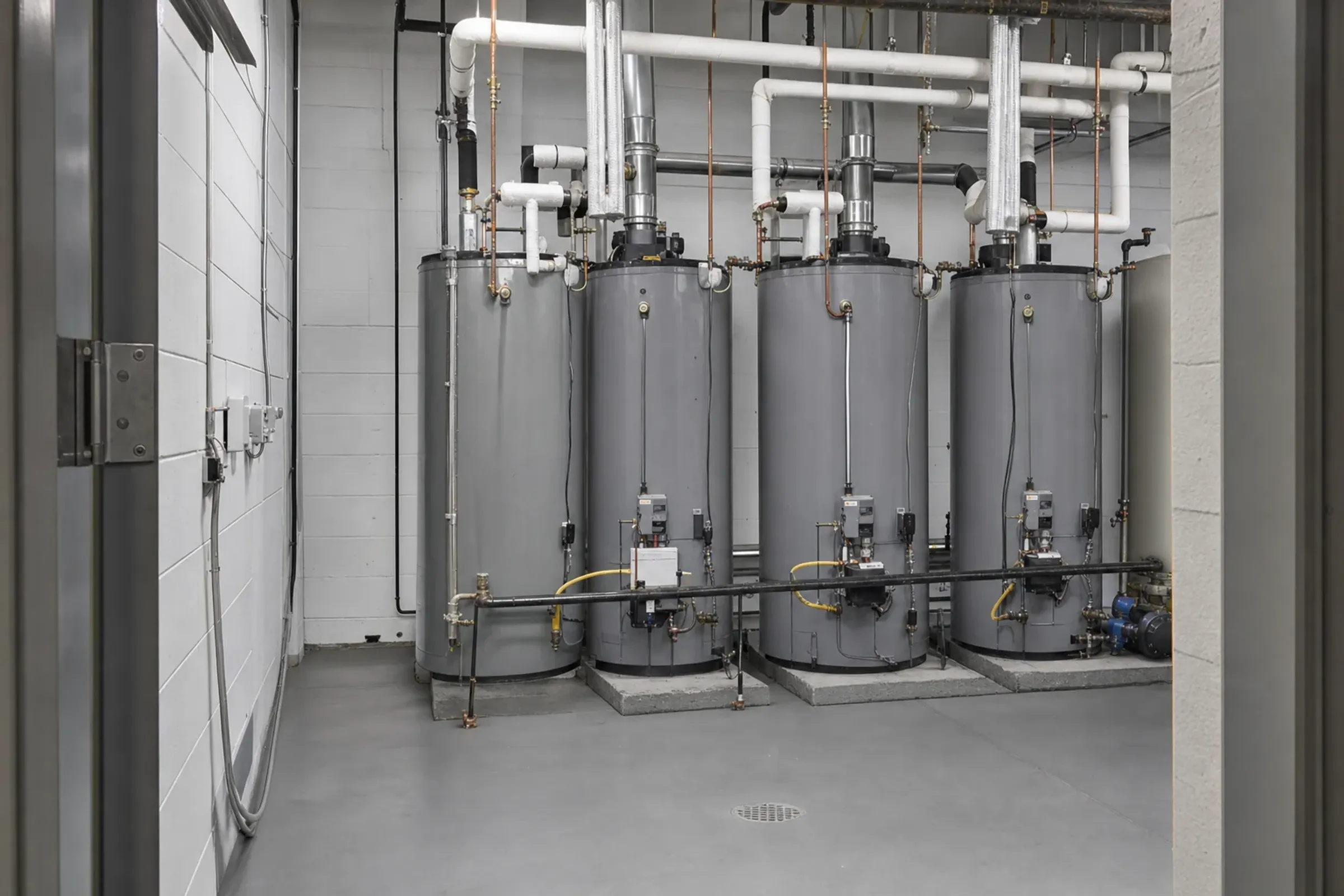
Commercial water heaters
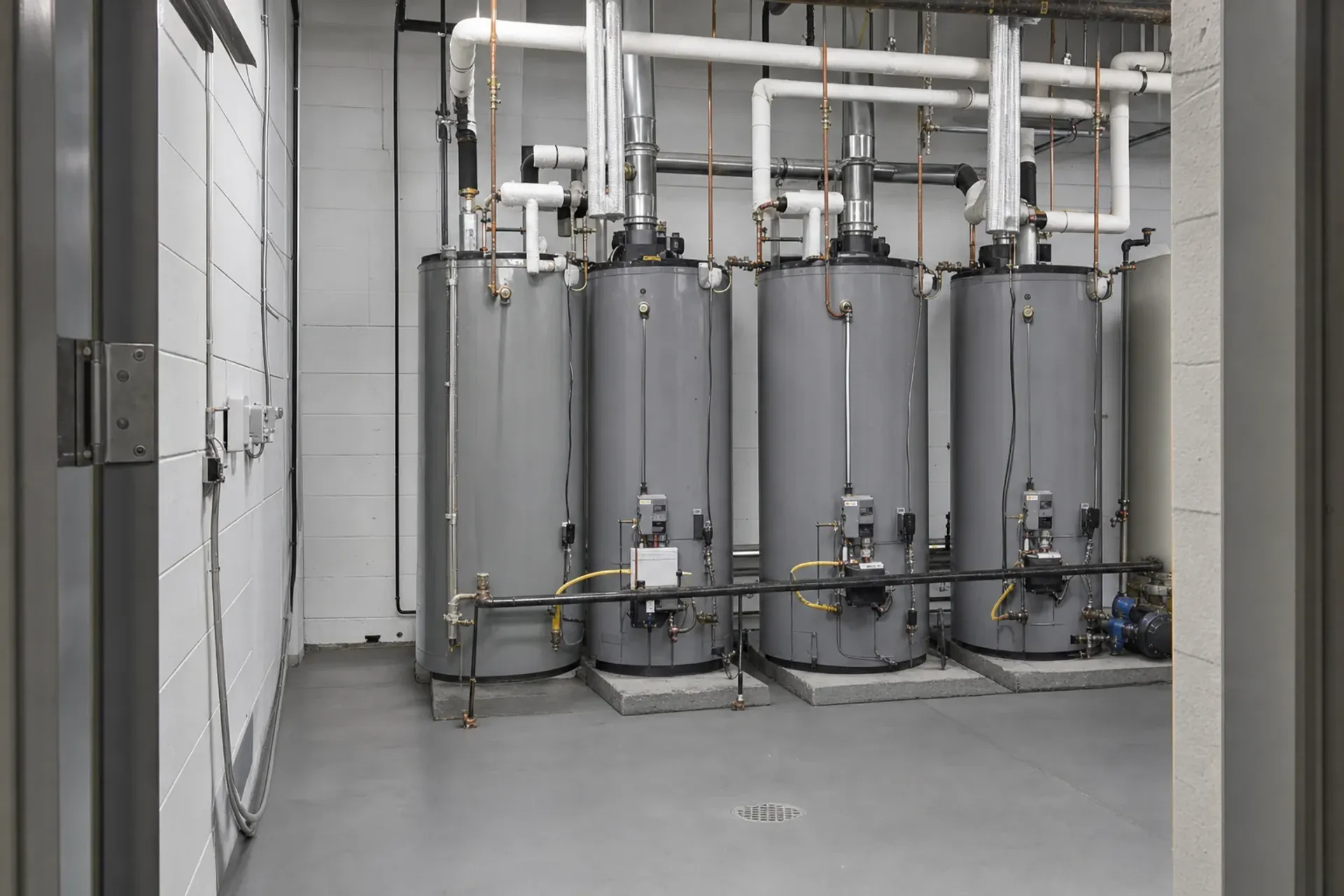
Restaurants, salons, gyms, laundries, HOAs and community centres. Different problem: when a commercial unit goes down the business stops, so the clock matters more than the invoice.
What we work on
High-capacity commercial tanks, multi-unit tankless banks, and gas and electric models. Where a single unit cannot be got back the same day we will look at a temporary arrangement to keep hot water running while the replacement is ordered.
One of the reviews is a commercial job
An after-hours replacement at a community centre, which is about as unglamorous and as time-critical as this work gets.
Tank or tankless, the honest comparison
No winner here. Two different answers to two different houses.
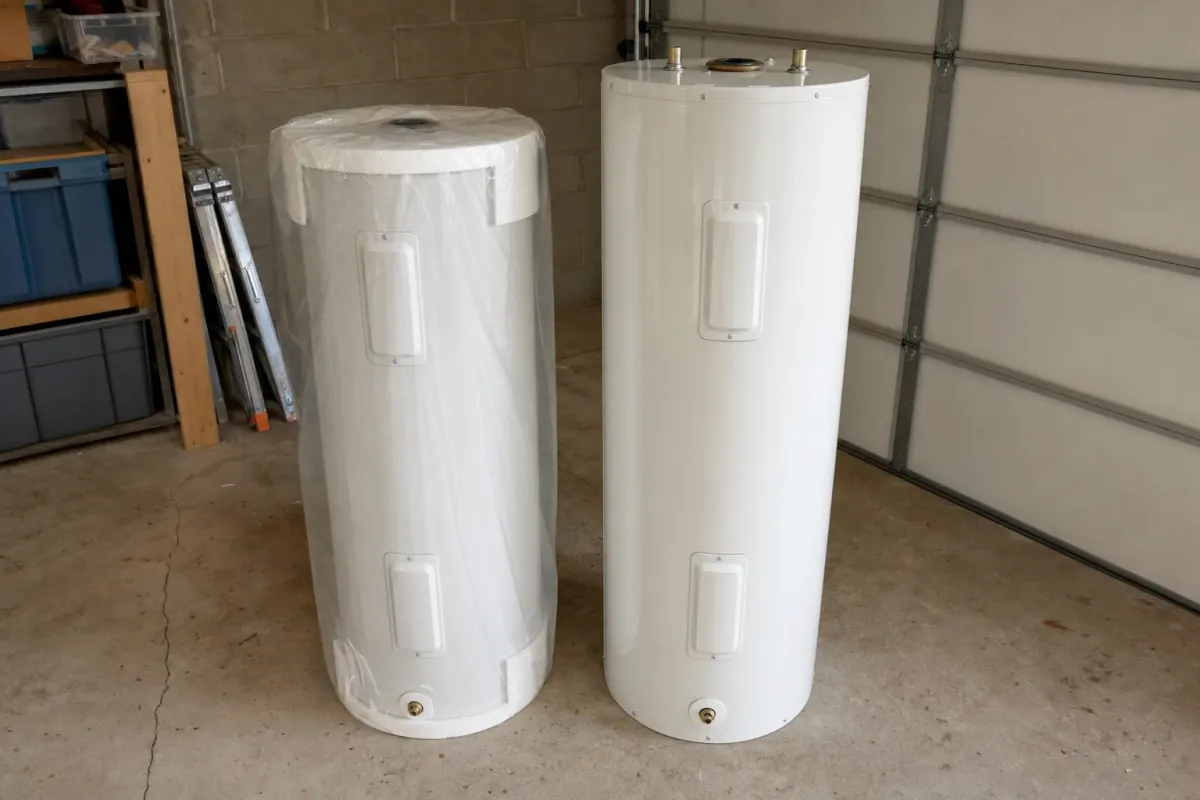
Tank
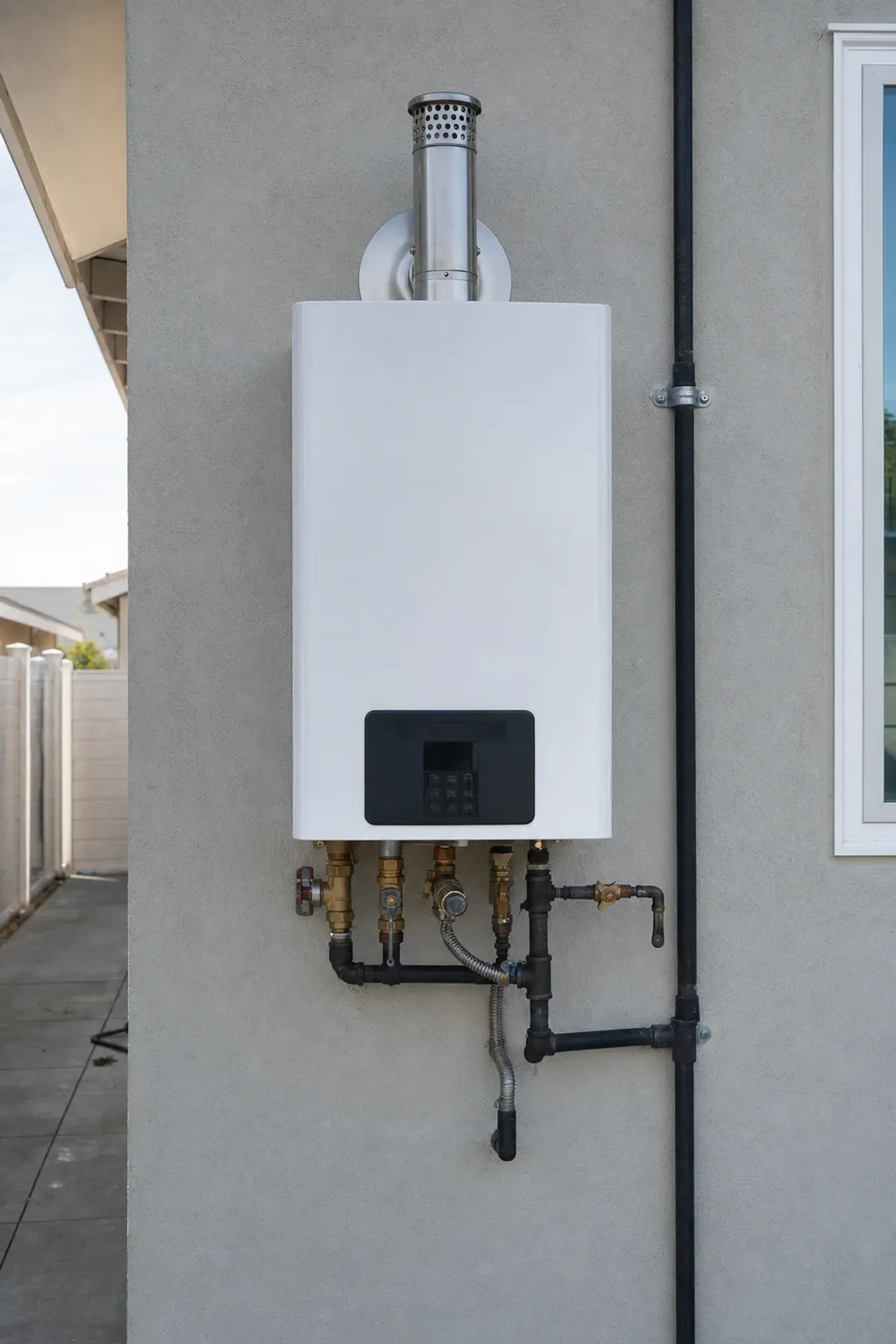
Tankless
Hot water and space
Hot water supply
Tank30-75 gallons, then you wait to recover
TanklessEndless, but limited by flow rate. Two showers and a dishwasher needs the right size.
Recovery after a big draw
Tank30-60 minutes
TanklessImmediate
Space
TankA closet or a garage corner
TanklessWall-mounted, gives the closet back
What it costs
Install cost
TankLower
TanklessHigher. Gas line, venting and condensate usually all change.
Running cost
TankStandby losses, heating water you are not using
TanklessNo standby loss; lower gas use for the same showers
Typical lifespan
Tank8-12 years on Orange County water
Tankless15-20 years with an annual descale
Living with it
Maintenance
TankAnnual flush, anode rod every 4-5 years
TanklessAnnual descale; service valves make it quick
When it fails
TankUsually with water on the floor
TanklessUsually with an error code and no water on the floor
Best for
TankOne or two people, a straightforward swap, a tight budget
TanklessBigger households, simultaneous demand, a long-term house
If nobody in the house has ever run out of hot water, a tank swap is the honest answer and we will say so on the phone. Tankless is worth it when the demand is real, not because it is newer.
Get both quotedWhat's included in every install
Ask the other quote whether these are in it. That is usually where the difference is.
-
The permit, pulled by us
California requires a plumbing permit to replace a water heater, and the inspection is where the strapping, venting and relief valve all get checked. We pull it and we meet the inspector.
-
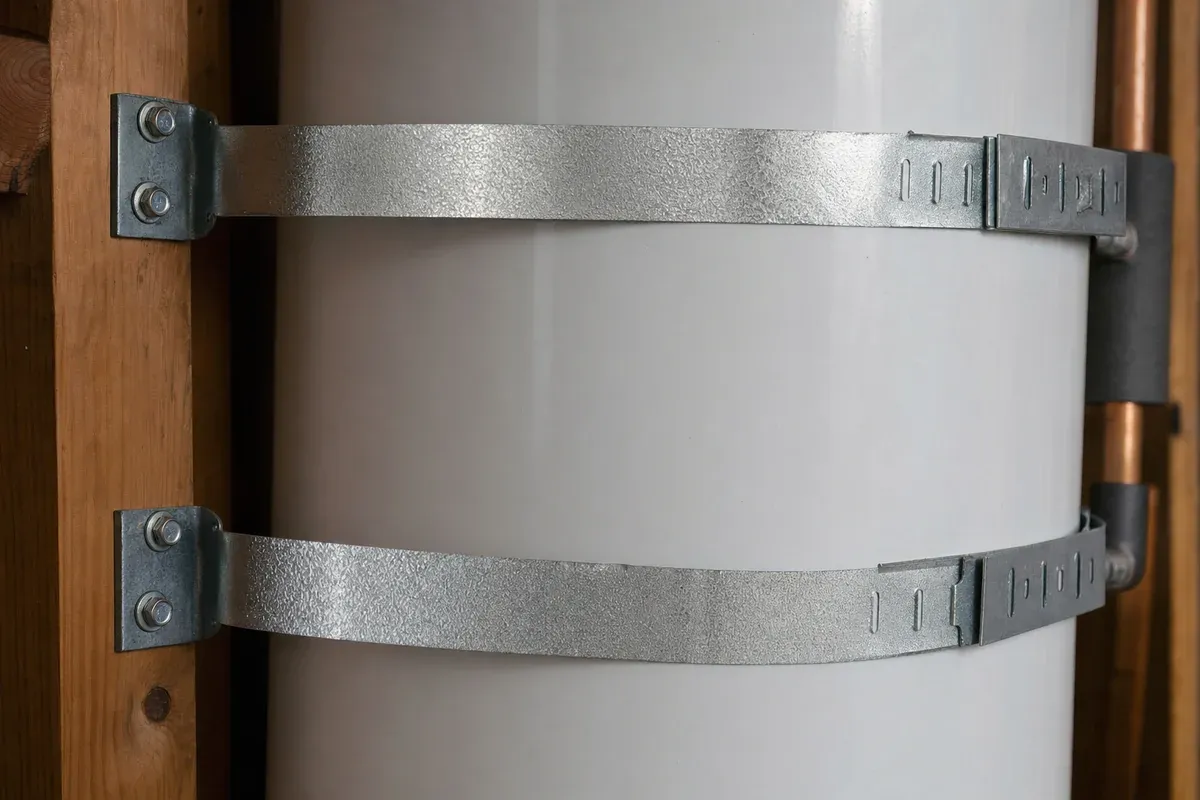
Two seismic straps
Upper third and lower third of the tank, lower strap at least four inches clear of the controls. Required in California, and the first thing an inspector checks.
-
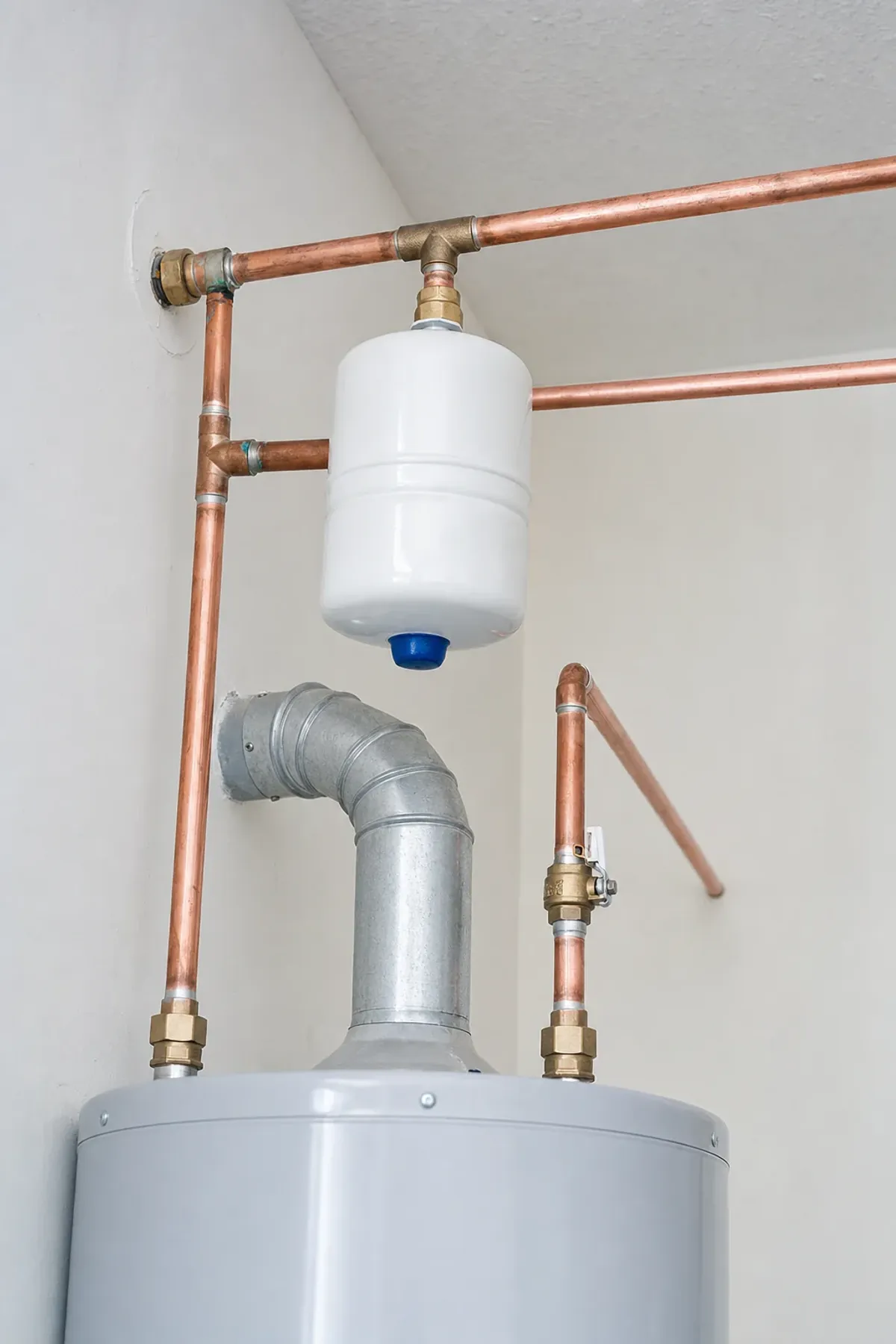
Expansion tank on a closed system
Any house with a pressure regulator, check valve or backflow preventer at the meter is a closed system. Heated water expands, the expansion has nowhere to go, and it pushes the T&P valve open until something gives. The expansion tank absorbs it.
-
T&P discharge line done properly
Full-size pipe, run downhill, no valve on it, no threads on the end, terminating outside where a drip is visible.
-
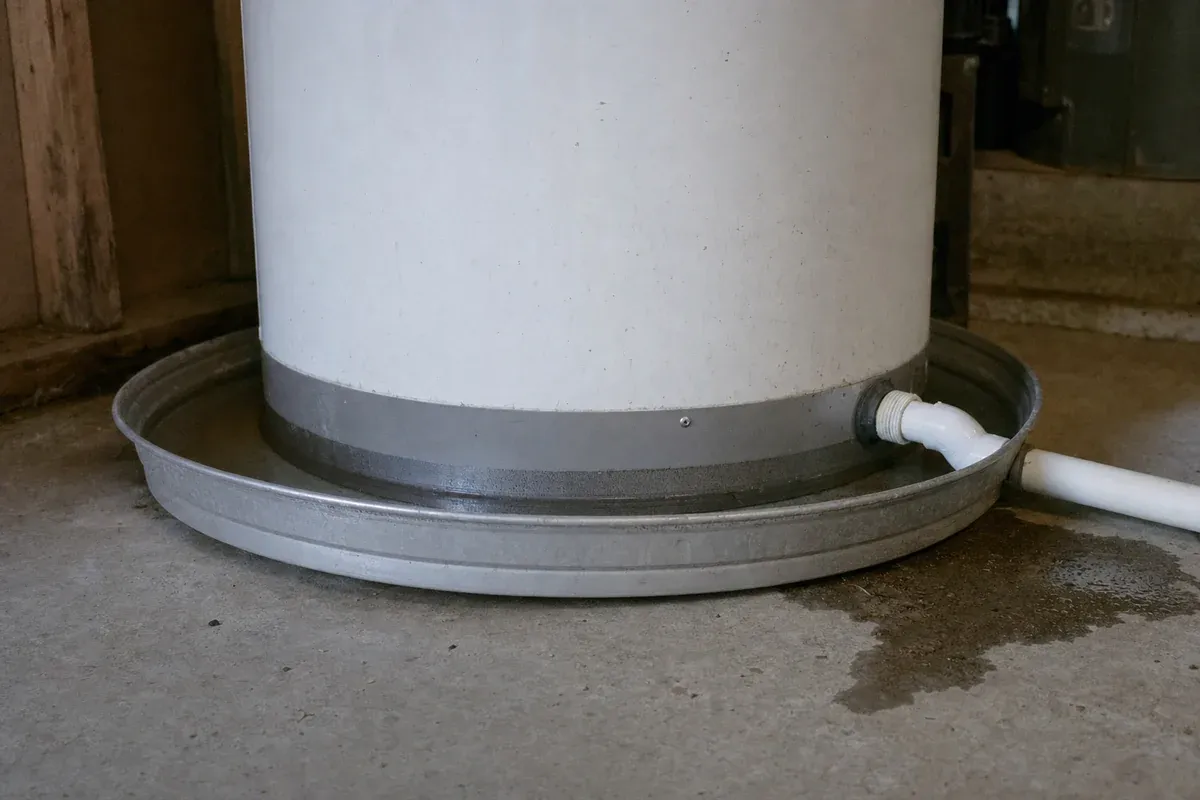
Drain pan and drain line
Wherever a leak would reach drywall, ceiling or floor. Attics and upstairs closets always.
-
New water flex connectors, gas flex, shut-off valve and sediment trap
We do not reuse twelve-year-old brass.
-
Title 24 pipe insulation
On the hot and cold lines at the heater.
-
Combustion air and draft checked
Before we leave, and the flue confirmed drawing on gas units.
-
Old unit hauled away and recycled
The old tank leaves with us.
-
Manufacturer warranty registered, and our labour warranty on top
We register the manufacturer warranty for you so the paperwork exists when you need it.
Offer
10% off for first time customers, seniors and military.
Mention it when you call or put it in the form. It comes off the quoted price before the work starts, so there is nothing to negotiate afterwards.
One discount per job.
Questions about the work
Straight answers to the things people ask on the phone before they book.
How long does a tank replacement take?
Three to four hours for a straight swap. Longer if the closet has to be reworked or the venting has to change.
How long does a tankless conversion take?
A full day for a straightforward one. Two if the gas line has to be re-run or the unit is moving to a new wall.
Why does a tankless unit need a bigger gas line?
A tankless unit fires at a much higher input than a tank because it heats water on demand instead of over an hour. A half-inch line that happily fed a 40-gallon tank will starve it, and you get error codes instead of showers. We run the gas load calculation before quoting, not after.
What is descaling and how often does a tankless need it?
Hard water leaves calcium inside the heat exchanger. Descaling circulates solution through it for about forty-five minutes and brings the flow rate back. Roughly once a year on Orange County water, every two years if you have a softener.
What are service valves and do I need them?
Isolation valves on the inlet and outlet of a tankless unit. They add a little to the install and turn every future descale from a two-hour job into a twenty-minute one. We fit them as standard.
Why do I need an expansion tank?
If your house has a pressure regulator, check valve or backflow preventer at the meter, it is a closed system. Water expands when it is heated and on a closed system that expansion has nowhere to go, so it pushes the T&P valve open or stresses the tank. An expansion tank absorbs it. It is a code requirement on closed systems, not an upsell.
Are earthquake straps required?
In California, yes. Two straps: one across the upper third of the tank, one across the lower third, with the lower strap at least four inches clear of the controls. It is the first thing an inspector looks at.
What is Title 24 and does it affect my water heater?
Title 24 is California's building energy efficiency standard. For a water heater replacement, the part you will actually see is pipe insulation on the hot and cold lines at the heater. It is included in every install we do.
My water heater is making a popping noise. Is that dangerous?
It is sediment on the bottom of the tank boiling under the burner. Not immediately dangerous, but it means the burner is heating through a layer of scale and the tank is working harder than it should. A flush fixes it on a younger tank. On a tank past ten years it is a warning.
Can you service a commercial water heater?
Yes. Restaurants, salons, gyms, laundries, HOAs and community centres, tank and tankless, gas and electric, including high-capacity units.
Still not sure which job it is?
Describe the symptom. We have heard it before and we will tell you straight whether it is a part, a flush or a new unit.