Do you need a permit to replace a water heater in California?
Yes. What the inspection checks, why the seismic straps and expansion tank matter, and what happens at sale time when there is no permit on file.
Yes. In California, replacing a water heater is permitted work under the state plumbing code, and every city in Orange County issues the permit and sends an inspector. It is one of the cheaper permits a homeowner will ever pull, and it is the part of the job most likely to be skipped by whoever is quoting you the lowest number.
What the inspector is looking at
The inspection is not paperwork for its own sake. It checks the handful of things that make a water heater safe in an earthquake state with hard water and closed plumbing systems.
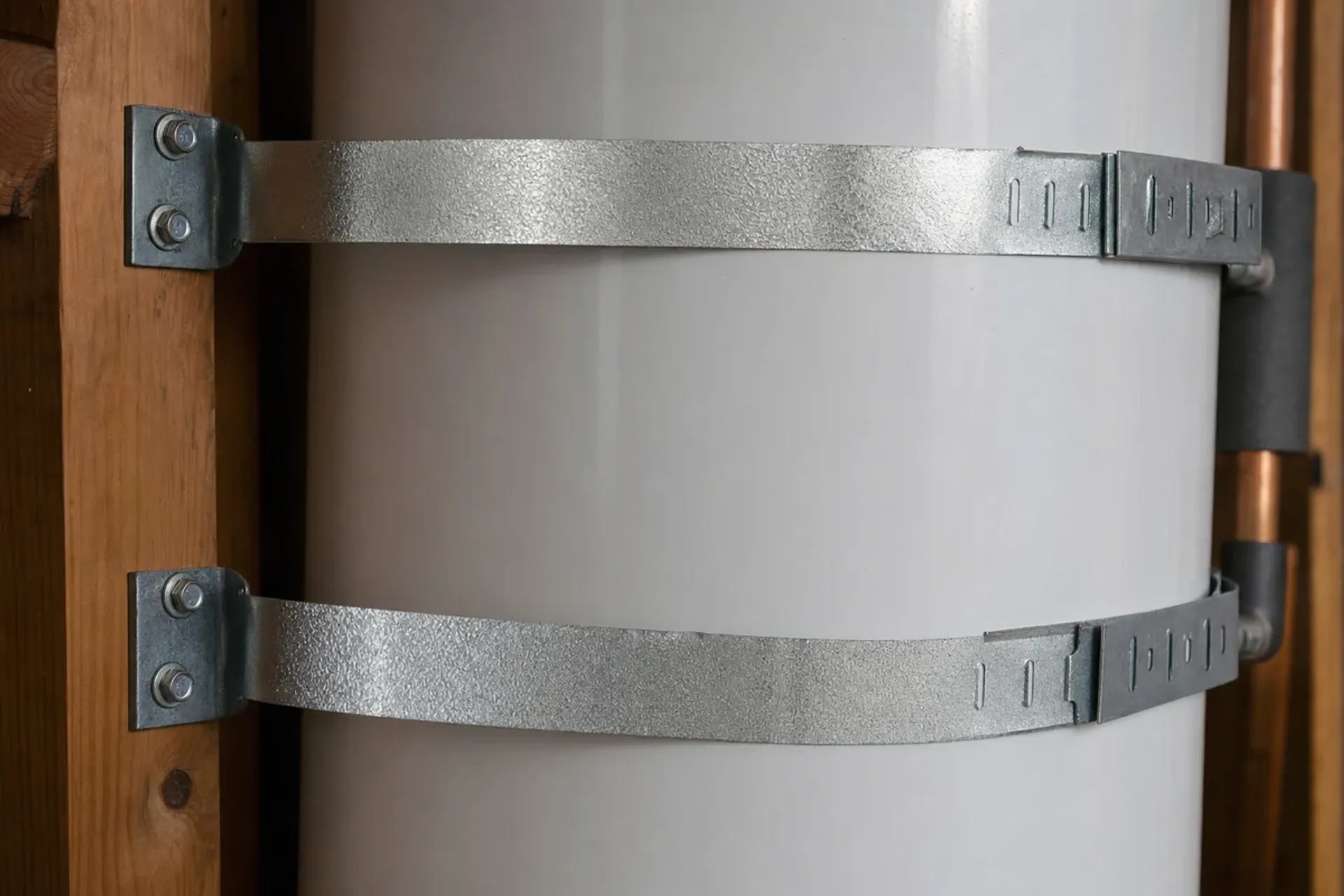
Two seismic straps. California requires the tank to be strapped to the wall at the upper third and the lower third, with the lower strap kept clear of the controls. A 50-gallon tank full of water weighs over 500 pounds. In a shake it walks, tips, and tears the gas line off. The straps are the first thing an inspector looks at.
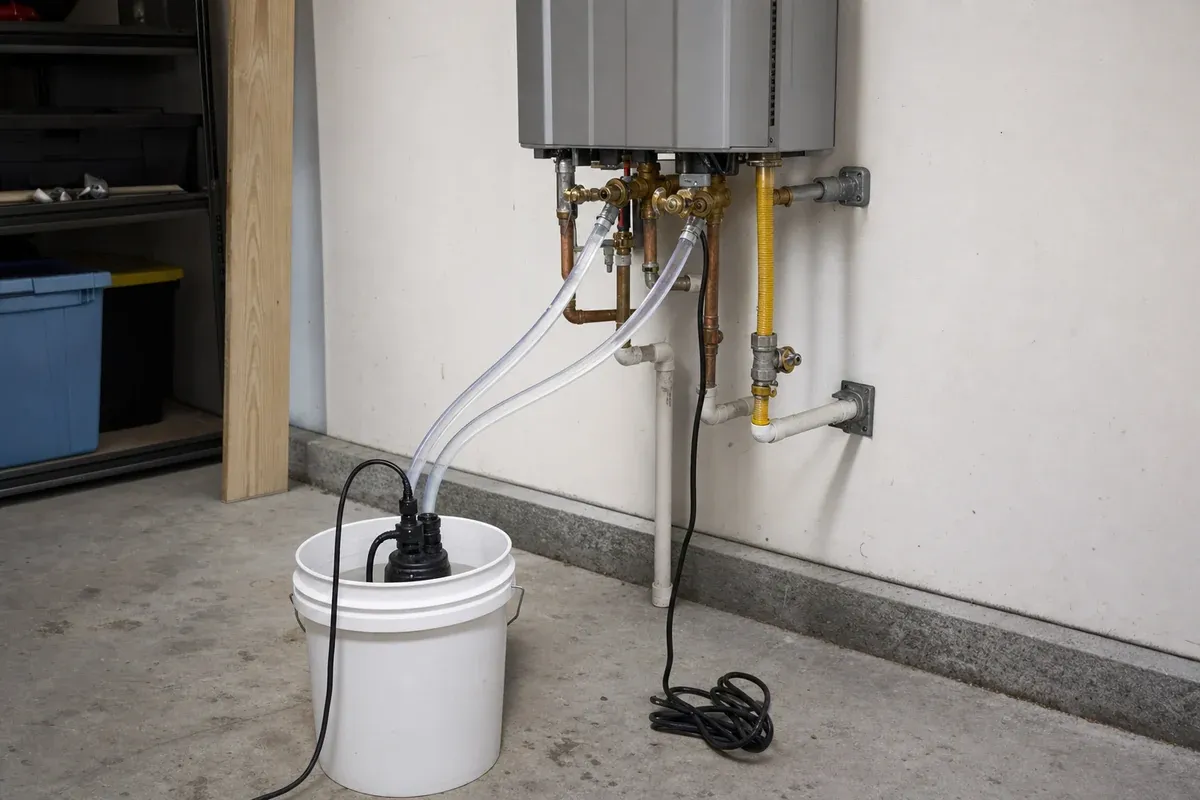
The T&P discharge line. The relief valve has to discharge through a full-size pipe, running downhill, with no valve on it and no threads on the end, terminating where a drip is visible. A relief valve that cannot relieve is a pressure vessel with no safety.
Expansion tank on a closed system. If your house has a pressure regulator, check valve or backflow preventer at the meter, heated water has nowhere to expand and the pressure climbs until the T&P valve opens. An expansion tank absorbs it. Most Orange County houses built or re-piped in the last few decades are closed systems.
Venting and combustion air on gas units. The flue has to draw, the draft hood has to be right, and the room has to supply enough air. This is the carbon monoxide check.
Gas connection. A proper flex connector, a sediment trap, and a shut-off valve.
Drain pan wherever a leak would damage the building, and Title 24 pipe insulation on the hot and cold lines at the heater.
Why installers skip it
Time and money. Pulling the permit means a trip to the city portal, a fee, and coming back for the inspection. An installer doing volume on price can shave a couple of hours off a job by not doing it, and most customers never ask.
What it costs you later
Two things. First, the safety items above are exactly the ones that get left out when nobody is checking, and you will not know until the straps you do not have would have mattered. Second, when you sell the house, the buyer’s inspector will look for the permit. An unpermitted water heater is a common line on a request for repairs, and the fix at that point is a permit, an inspection, and whatever the inspector finds.
What we do
We pull the permit on every replacement and we meet the inspector. It is in the quote, not an extra. The full list of what comes with every install is on the services page, and the replacement page has the rest of the day laid out: tank replacement.