No hot water: what to check before you call, gas and electric
Three things to look at on a gas heater and two on an electric one. Some fix it on the spot; the rest tell us what to bring so it is one visit.

A cold shower is not always a dead water heater. A few minutes of looking will either fix it or tell us exactly which part to put on the truck. Here is the short version by fuel type.
First, which one do you have?
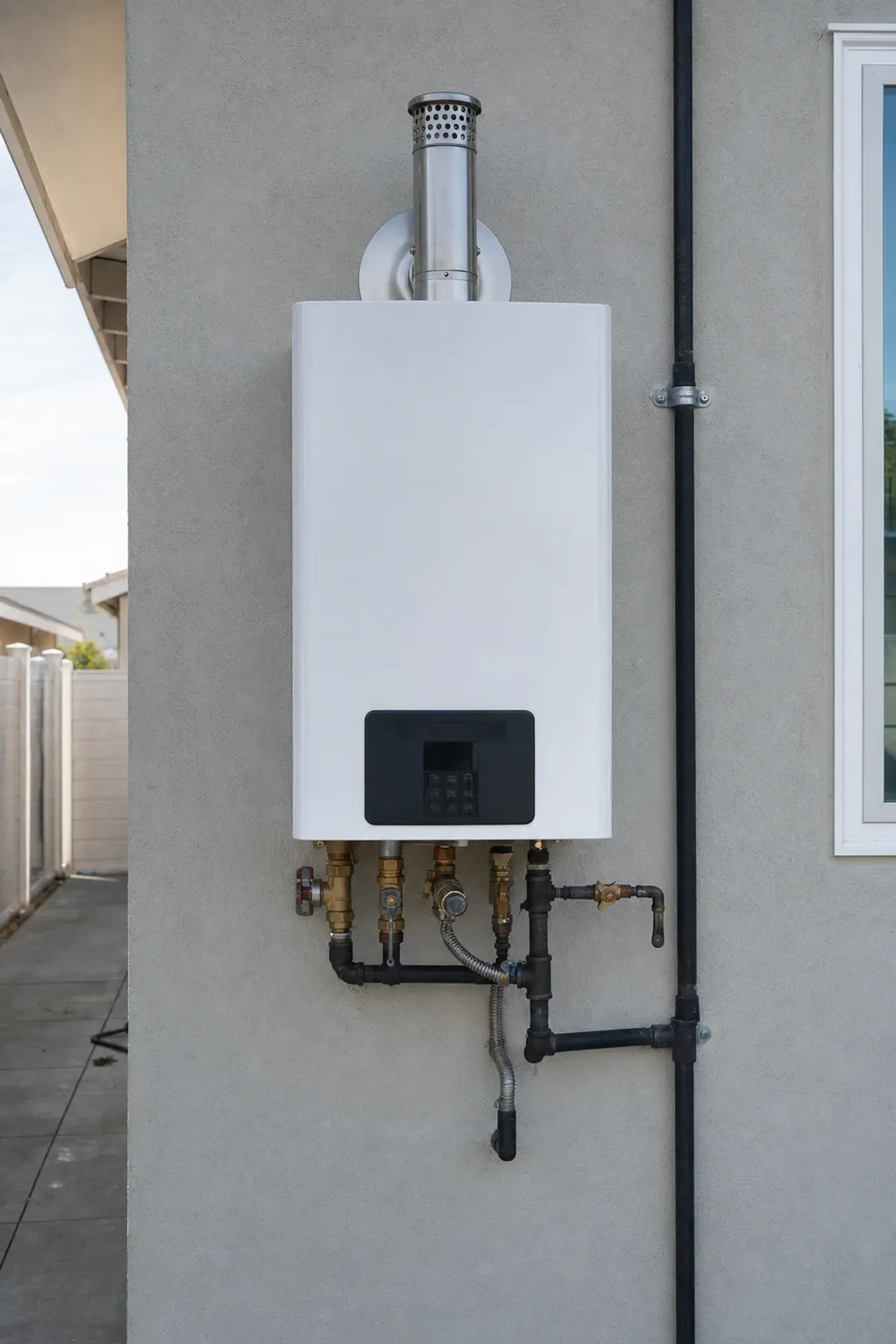
A gas heater has a flue pipe going up from the top, a gas line and a control knob near the bottom. An electric heater has a conduit or cable going into the side, two access panels on the side, and no flue. If you are not sure, the label will say.
Gas water heaters
Is the pilot lit? Look through the small window near the bottom. On older tanks the pilot is a small blue flame; on newer ones a status light blinks a code. If the pilot is out, the label on the tank has the relighting steps. If it relights and stays lit, you are done. If it lights and goes out again within a minute, the thermocouple or flame sensor is the usual suspect, and that is a same-visit part.
Is the gas on? The knob on the gas valve should be at ON, not PILOT or OFF. Check that the shut-off valve on the gas line, the small lever, is in line with the pipe. If someone did work on the house recently, this is worth checking.
Is the status light blinking? Count the blinks. The code chart is on the tank. Two or three blinks is usually a sensor; a fast continuous blink often means the gas control valve itself. Tell us the code when you call.
Is there water on the floor? If so, stop here and read what to do about a leak.
Electric water heaters
Is the breaker on? Water heater breakers are double-pole, usually 30 amp. A breaker that has tripped often sits in the middle rather than fully off. Turn it fully off, then on. If it trips again, leave it off and call; something is shorting.
Has the high-limit reset tripped? Behind the upper access panel, under the insulation, there is a small red button on the thermostat. It trips when the water gets too hot, which usually means a thermostat has failed or an element has shorted. Switch off the breaker before opening the panel. Press the button. If it clicks and hot water returns, you have bought time, but the reason it tripped is still there and it will trip again.
Lukewarm rather than cold? That is usually the upper element or upper thermostat. Cold after a short run is usually the lower one. Both are same-visit parts.
What “usually a same-visit repair” means
Thermocouples, igniters, flame sensors, elements and thermostats are on the truck. Gas control valves are common enough that we carry the usual ones. So most no-hot-water calls on a tank under ten years old are fixed in one visit.
The line we draw is age. A ten-year-old tank with a bad thermocouple gets a thermocouple. A twelve-year-old tank with a bad gas valve gets a conversation about whether that part is worth putting into a tank that is near the end anyway. More on where that line sits is on the repair page. When you call, (714) 676-8175, tell us the fuel type, the age if you know it, and any code on the light.