Why a tankless water heater in Orange County needs a descale every year
Hard water leaves scale in the heat exchanger. The symptoms, what a descale involves, and why isolation valves turn a two hour job into twenty minutes.
A tankless water heater has one job the brochure does not mention: surviving the water it is fed. In Orange County that water is hard, and the unit’s heat exchanger is a set of narrow passages that scale closes a little every day. The fix is cheap and boring, and skipping it is how a twenty-year appliance becomes an eight-year one.
What scale does inside the unit
Calcium and magnesium come out of solution when water is heated, and the hottest surface in the house is the inside of the heat exchanger. Scale builds on those walls, the water flow drops, the unit has to work harder to hit the set temperature, and eventually the flow sensor or a temperature sensor decides something is wrong and shuts it down.
The symptoms, in the order they usually appear
- Hot water takes longer to arrive, or the temperature wanders while a shower runs.
- The unit gets loud, a rumble or a kettle sound, as water boils against scale.
- Flow drops. The shower is noticeably weaker on hot than on cold.
- Error codes. Ignition failure, flame loss, a fan or flow-sensor fault. Different brands use different numbers, but the family of codes usually means the same thing: scale.
If you are at step four, the good news is that a descale often clears it. A dead heat exchanger is the expensive outcome, and it is the one an annual service prevents.
What a descale actually is
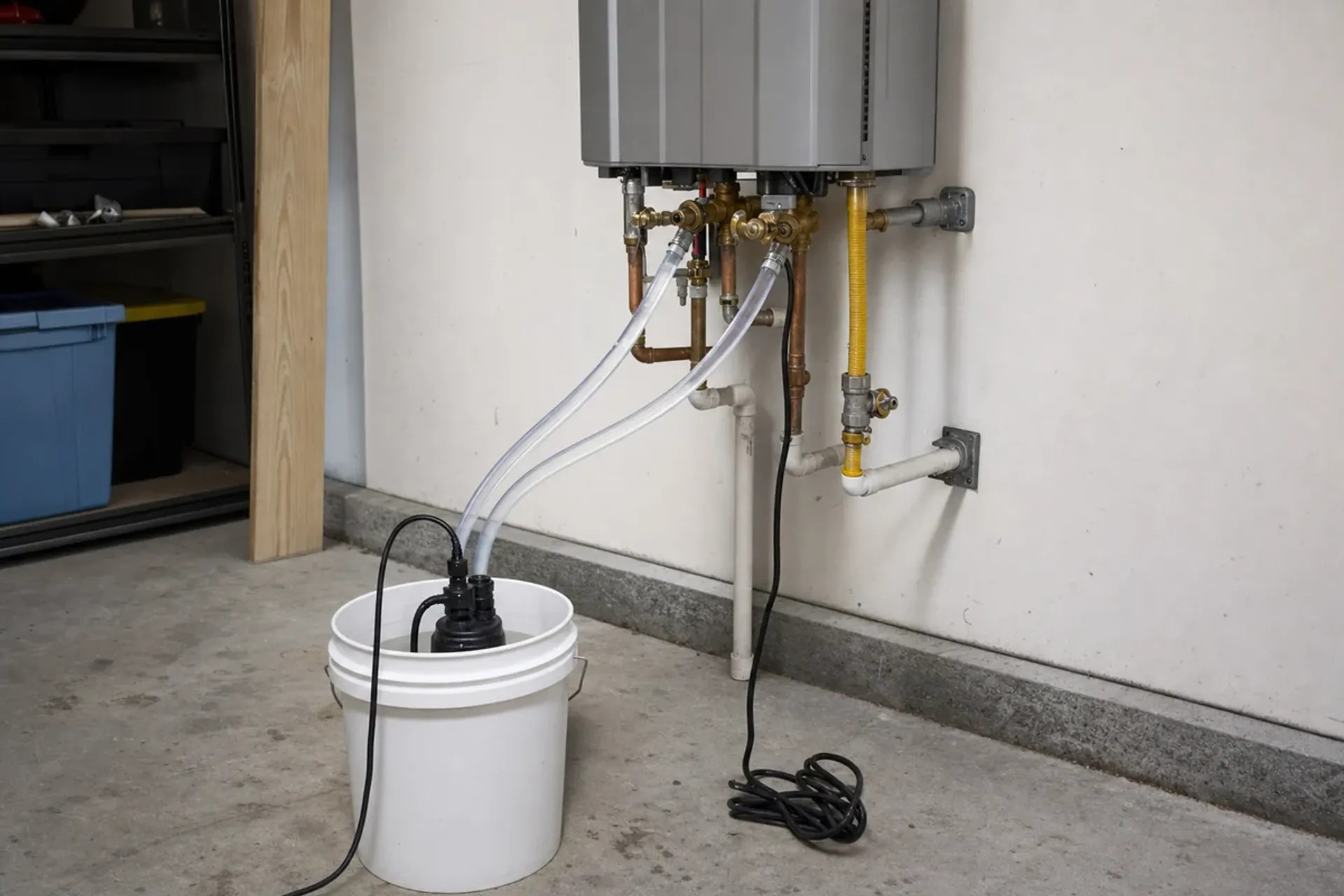
We close the isolation valves so the unit is cut off from the house plumbing, connect a small pump and a bucket to the service ports, and circulate a descaling solution through the heat exchanger for about forty-five minutes. Then it is flushed with clean water, the inlet filter is cleaned, and the flow rate is checked against where it should be. On most units the whole visit is about an hour.
Why the valves matter so much
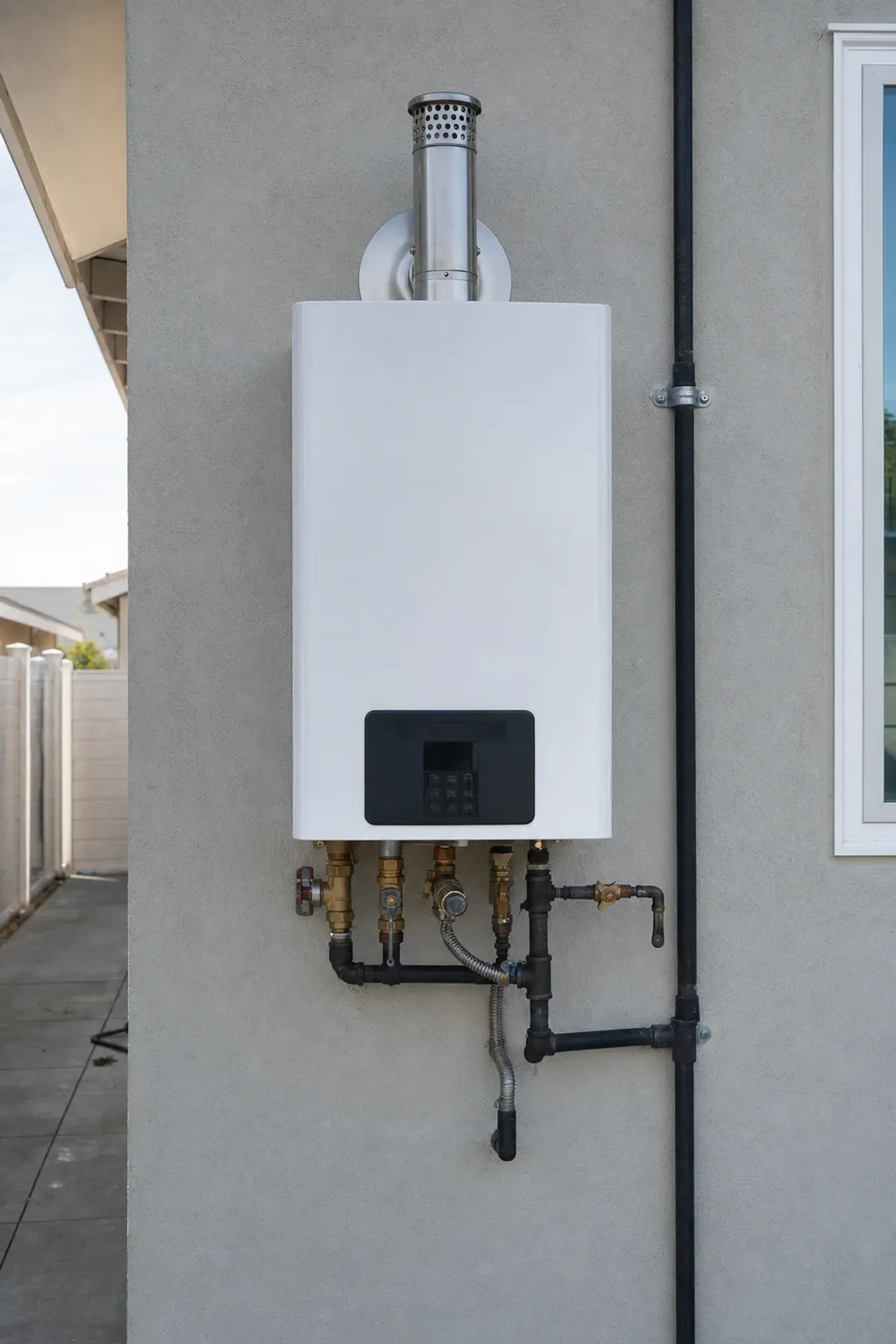
Isolation and service valves are a small kit fitted on the inlet and outlet at install time. With them, a descale is the twenty-minute circulation described above. Without them, the unit has to be disconnected from the house plumbing, which turns the same job into a couple of hours and costs more every year. We fit them on every tankless install, and if yours does not have them, adding them is worth doing at the first service.
How often
Once a year on Orange County water is the honest default. If the house has a working softener, every two years is usually fine. If the unit serves a large household running back to back showers, or you have noticed any of the symptoms above, do not wait for the anniversary.
The descaling page has what we check while we are there, including igniters, flame rods and the inlet filter: tankless repair and descaling. And if you are still deciding whether to go tankless at all, the tank or tankless comparison is the place to start.