How long does a water heater last in Orange County?
Most tanks here give out at 8 to 12 years and hard water is the reason. How to read the age off the label, what shortens it, and when to replace first.
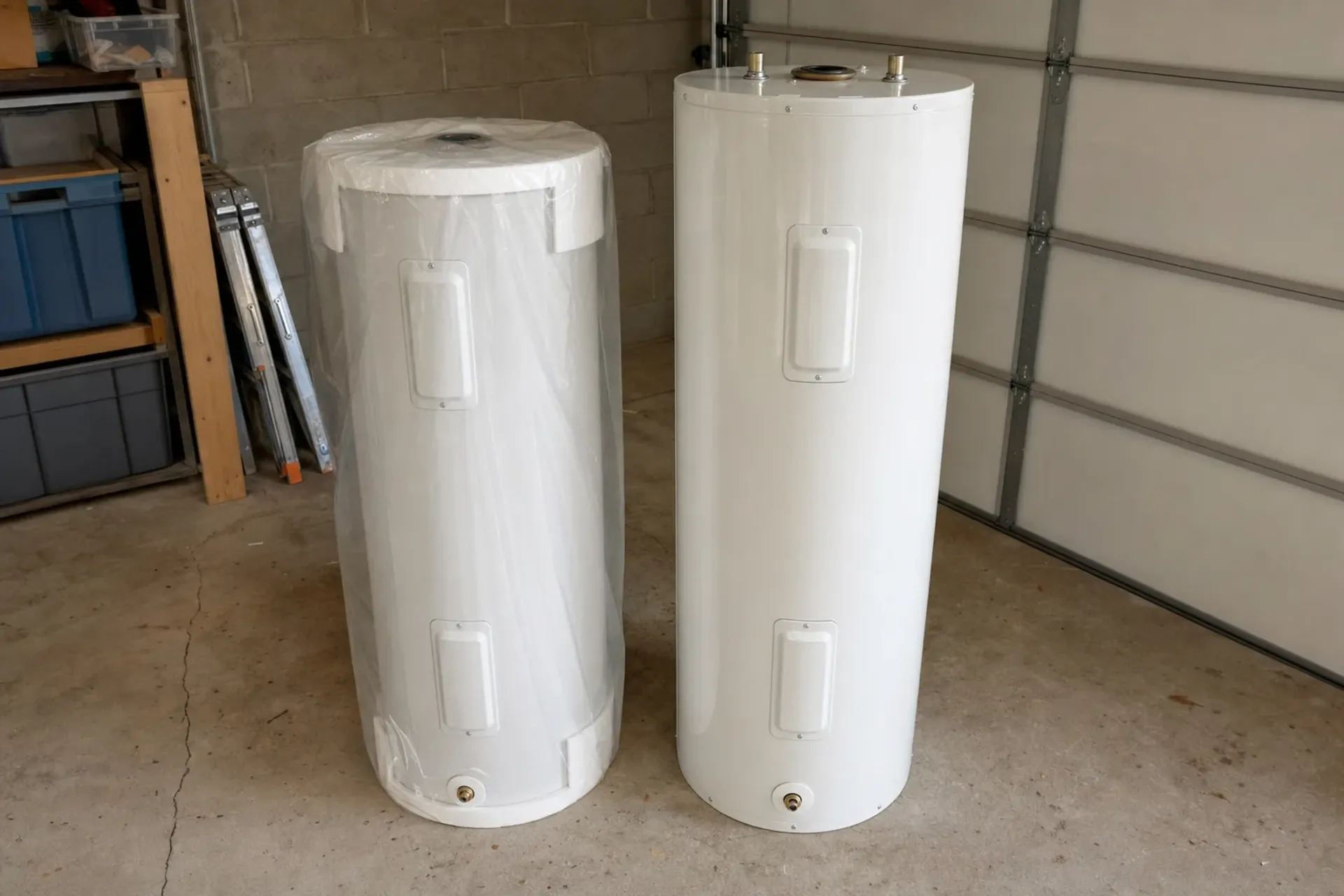
Ask ten Orange County homeowners how old their water heater is and most will guess. The honest answer for a standard tank in this county is eight to twelve years, and the reason it is not fifteen is the water.
Why Orange County is hard on tanks
Most of the county’s water is hard by any measure, a blend of imported Colorado River water and local groundwater with plenty of dissolved calcium and magnesium. Every time the burner fires, some of that mineral drops out of the water and settles on the bottom of the tank as sediment.
That layer does two things. It insulates the water from the burner, so the tank runs longer and hotter to hit the same temperature. And it traps pockets of water underneath it that boil and pop, which is the rumbling you hear from an older tank. Steel that runs hotter than it was designed for, year after year, fails sooner.
The anode rod inside the tank is meant to corrode instead of the tank. In hard water it is used up faster, and almost nobody replaces it. Once the anode is gone, the tank itself becomes the sacrificial part.
How to find out how old yours is
Look at the manufacturer’s label on the side of the tank. The serial number encodes the build date, usually as the first letters and digits. Rheem, Bradford White, A. O. Smith and State each use a slightly different format, but the pattern is always a year and a month somewhere in the first four characters. If the label is unreadable, the permit on file with your city is the next best record, and if there is no permit, that is worth knowing too.
The signs it is near the end
- Rumbling or popping when the burner runs. That is sediment, and on a tank past ten years it is a warning rather than a repair.
- Rust in the hot water only. The cold tap runs clean, the hot tap runs brown for a second. The tank lining is going.
- Moisture around the base that is not from the T&P valve or a fitting. Water coming through the tank body means the glass lining has failed, and there is no repair for that.
- Hot water that runs out sooner than it used to. Sediment is taking up space that used to hold water.
Replace before it fails, or wait?
A tank almost always fails with water on the floor. If the heater is in a garage with a drain nearby, waiting is a reasonable bet. If it is in an upstairs closet, an attic, or anywhere over finished floor, the cost of waiting is drywall and flooring on top of the heater.
Our rule of thumb is simple. A tank under eight years old with a problem usually gets repaired. A tank past twelve with any problem usually gets replaced, because the next problem is not far behind. In between, it depends on what failed and where the tank sits, and we will tell you which side of the line you are on.
What buys you more years
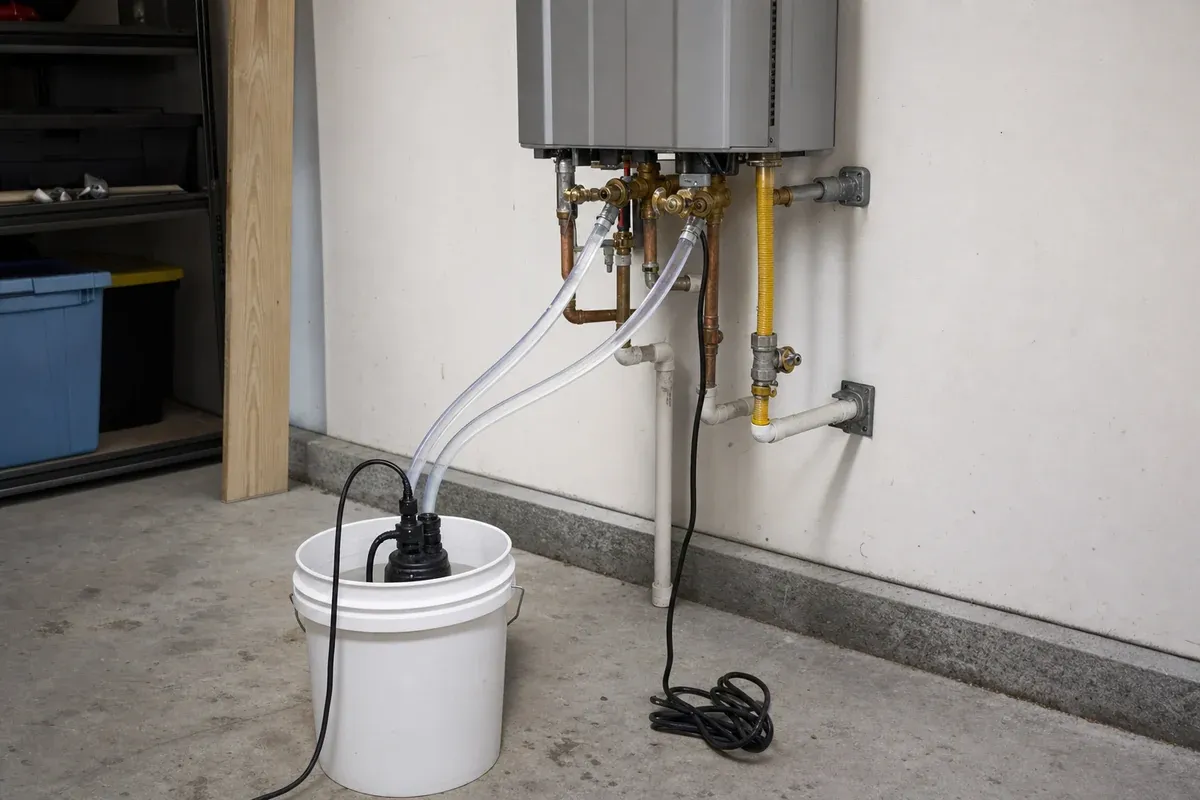
An annual flush clears the sediment before it hardens. A new anode rod every four to five years keeps the tank from becoming the sacrificial part. Neither is expensive, and together they are the difference between a tank that lasts eight years and one that lasts fifteen. Both are on our flush and maintenance page.
If yours is already past ten and you would rather choose the day than have it chosen for you, tank replacement is the page to read next, and the number is (714) 676-8175.